At The Course Table, defining plates begin with seasonal Australian ingredients, then find their shape through measured technique and the rhythm of a long table. Each course invites you to settle in, share the conversation and notice the play between texture, temperature and the last considered gesture at service.
A plate becomes a signature through attention to the ingredient, the pass and the people waiting at the table.
01
Start with the season
We begin with ingredients when they feel most expressive. Produce, seafood and herbs set a direction through freshness, acidity, sweetness and texture, allowing a dish to respond to the season rather than forcing a fixed idea onto the plate. That starting point keeps the menu alert, grounded and open to small changes in character.
02
Build contrast at the pass
At the pass, contrast gives a dish its movement. A charred edge can meet a clean herb note; richness can be answered by bitterness; a crisp surface can sit beside a soft centre. The work is practical and precise, bringing flavour and temperature into balance before the plate leaves the kitchen.
03
Finish for the table
Plating is the final stage of hospitality, not a separate performance. A dish is finished for its place among conversation, wine, cocktails and shared courses, with enough clarity for each element to be noticed as the table settles into its own pace.
The plate arrives; the evening opens.
Seasonal study
Sea, garden and orchard
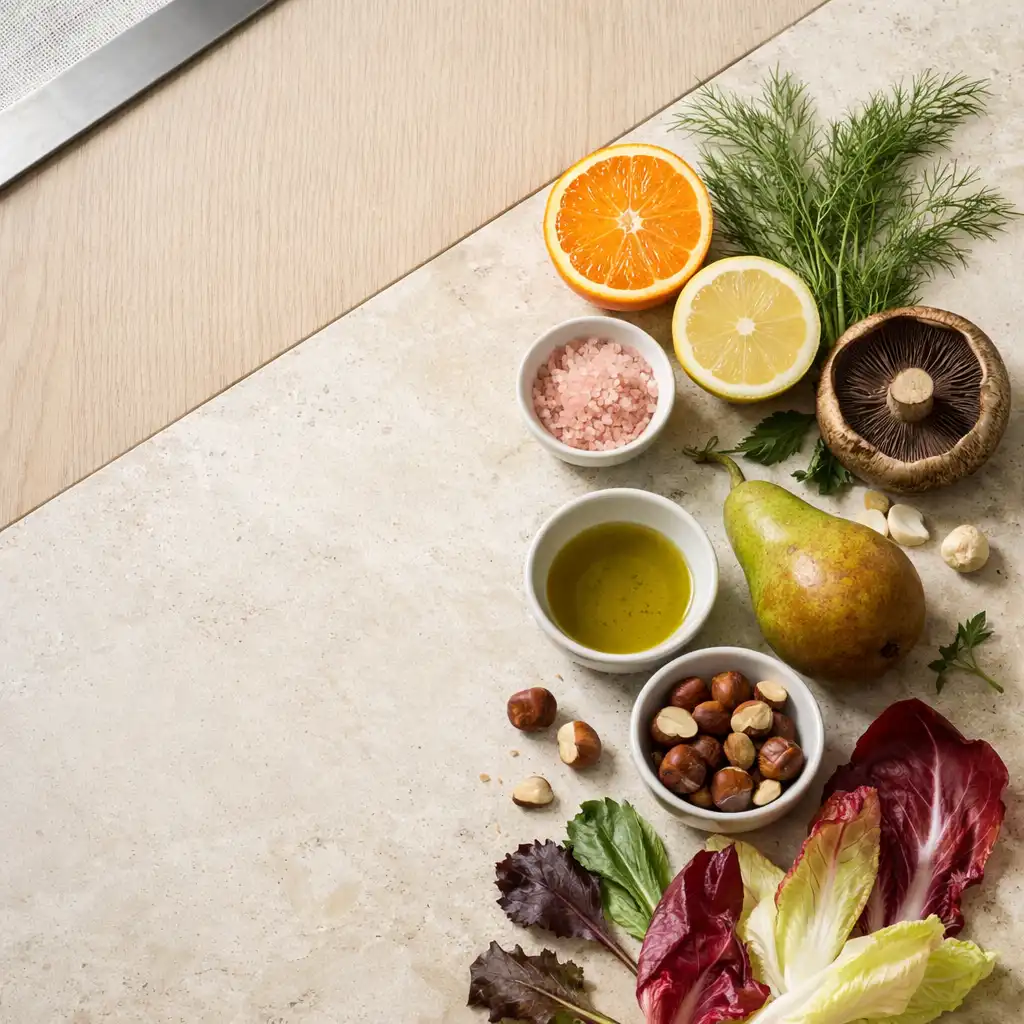
Before a course is composed, its ingredients offer a flavour map. This seasonal study follows clean marine notes, leafy savoury depth and the gentle sweetness of fruit, inviting diners to trace a plate from its raw character to its final arrangement. It is not a fixed procurement list; it is a way of noticing what each course is trying to say.
Sea and citrus
For seafood, clean marine flavour can be lifted by citrus, saline seasoning and fresh herbs. The result is less about a single ingredient than the tension between brightness, savoury depth and a finish that remains clear.
Fire and leaf
Flame brings depth to meat and vegetables alike, while bitter leaves and a bright garnish keep the palate moving. This balance returns across the menu in different textures, temperatures and degrees of smoke.
Fruit and cream
Dessert turns towards ripe fruit, cultured dairy, crisp pastry or toasted grain. Those elements offer a lighter counterpoint to savoury courses, carrying warmth and texture into the final plate.
Ingredient study / pale oak, travertine and porcelain
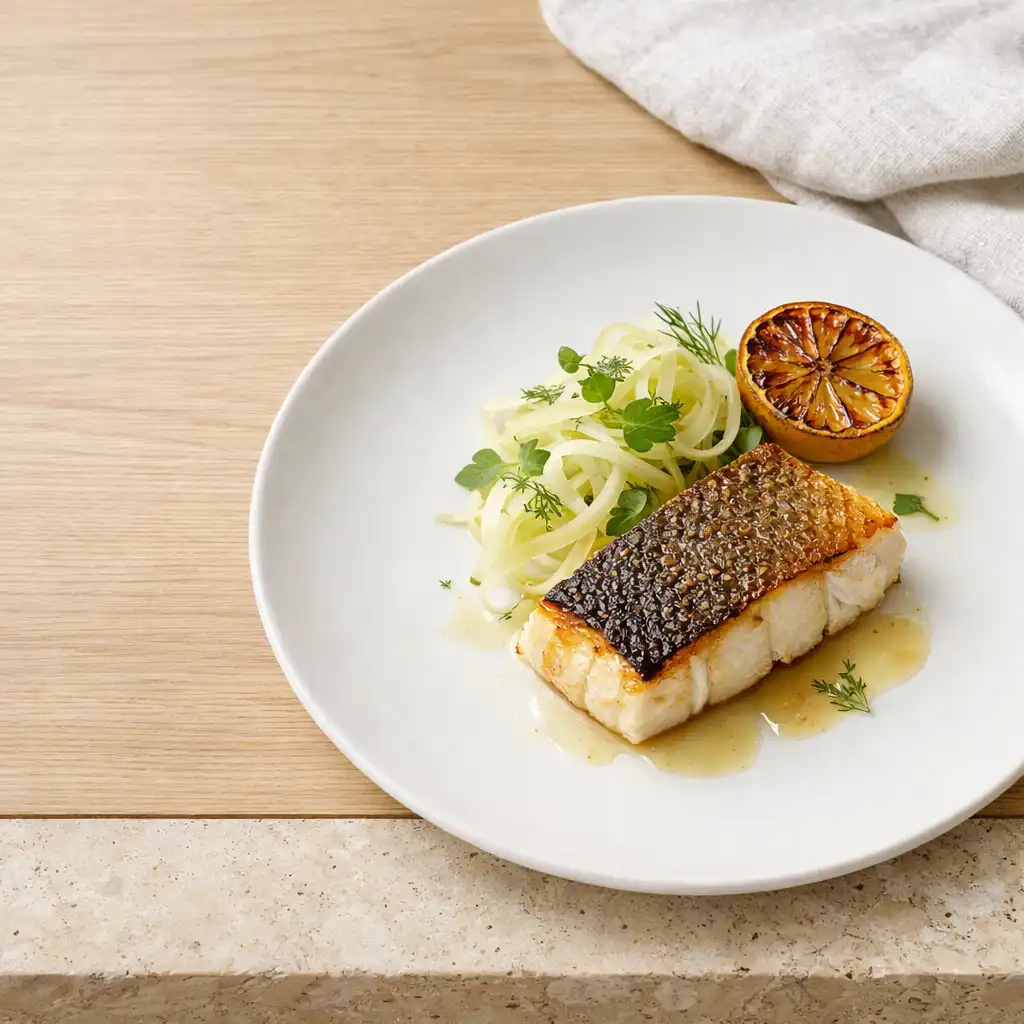
Ocean course / char, fennel and a savoury gloss
Signature one / ocean course
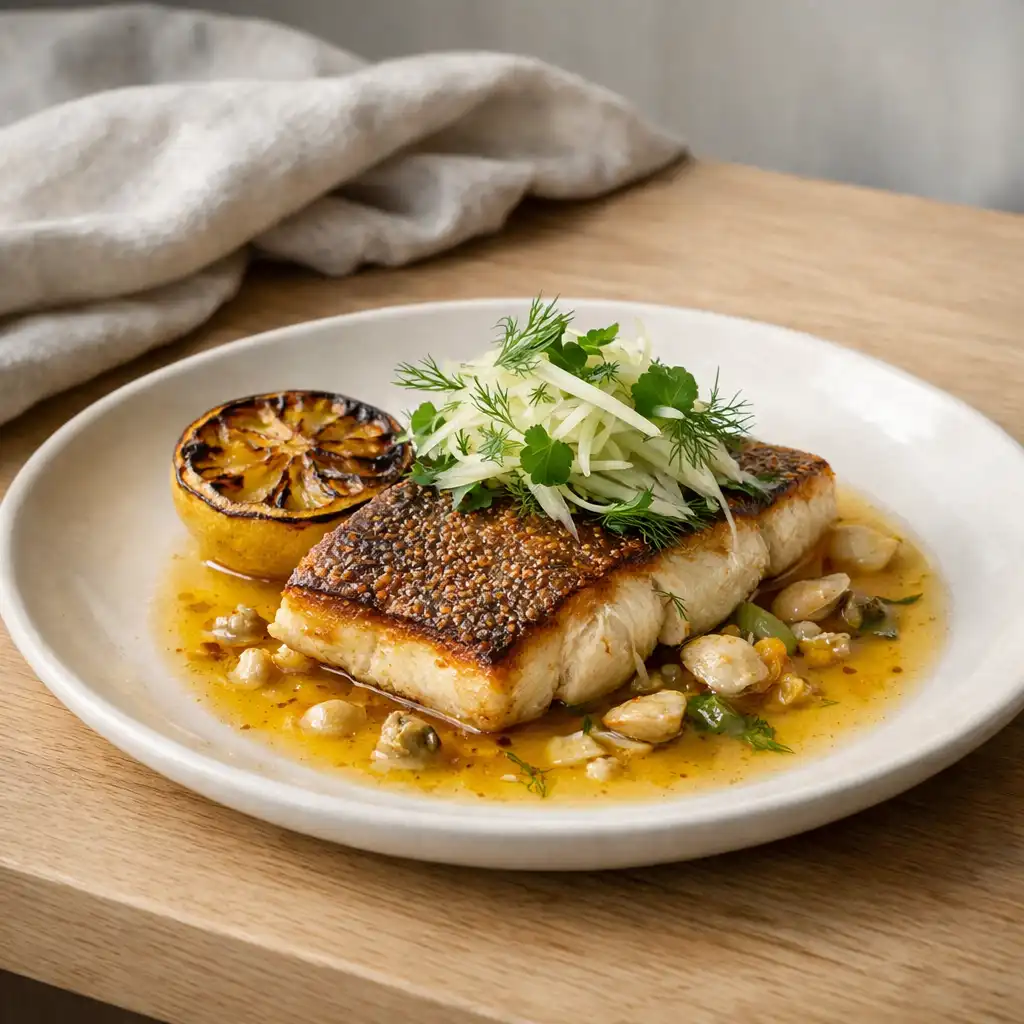
Line-caught fish, charred lemon, fennel and shellfish butter
A plate built around clean fish, this course brings smoke, acidity and a measured savoury gloss into close conversation. The charred lemon sharpens the richness of shellfish butter, while fennel brings an aniseed lift that keeps the plate open and aromatic. It is composed for contrast without losing the directness of the main ingredient.
The treatment is deliberately restrained. A golden exterior, tender flesh and a shallow pool of sauce create different temperatures and textures as the dish is shared across the table. Seasonal details may shift, but the intention remains a seafood course that feels both generous and precise.
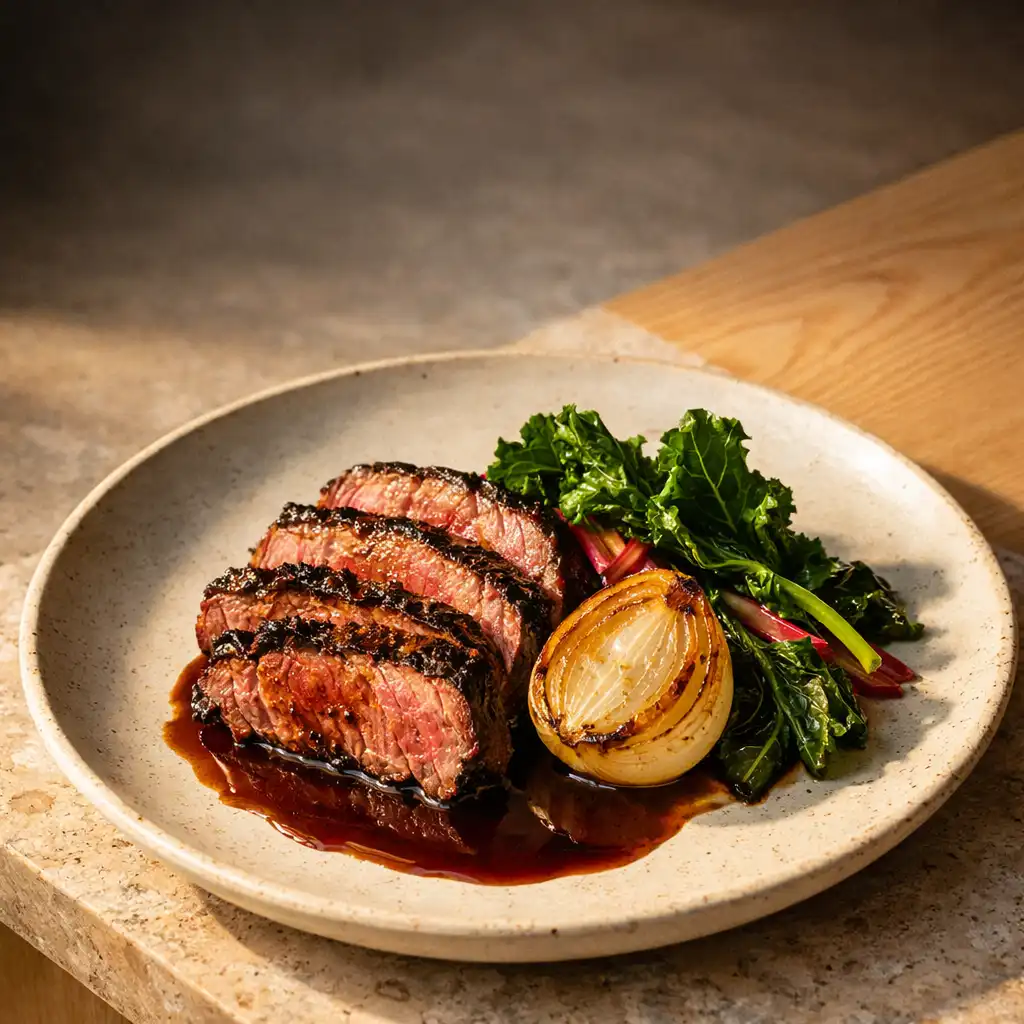
Wood-fired beef, smoked onion, bitter leaves and pepperberry jus
This fire-led course is built around the depth of wood-fired beef, balanced rather than overwhelmed by its accompaniments. Smoked onion brings softness and smoke, bitter leaves offer a clean edge, and pepperberry jus draws the elements together with a glossy savoury finish.
The plate is considered as a progression: heat first, then freshness, then depth. Each component is there to cut through richness or extend it, making room for the beef’s texture while keeping the experience attentive and unhurried.
Fire
Heat from the grill brings a marked exterior and a savoury, smoke-softened character that anchors the course.
Balance
Bitter leaves and the quiet sweetness of onion offer freshness against the plate’s fuller flavours.
Finish
The jus gathers the elements into a lasting savoury note, without asking the dish to become heavy.
Fire course / late-afternoon light on travertine
Garden course / roast depth, leaf and toasted nut
Signature three / garden course
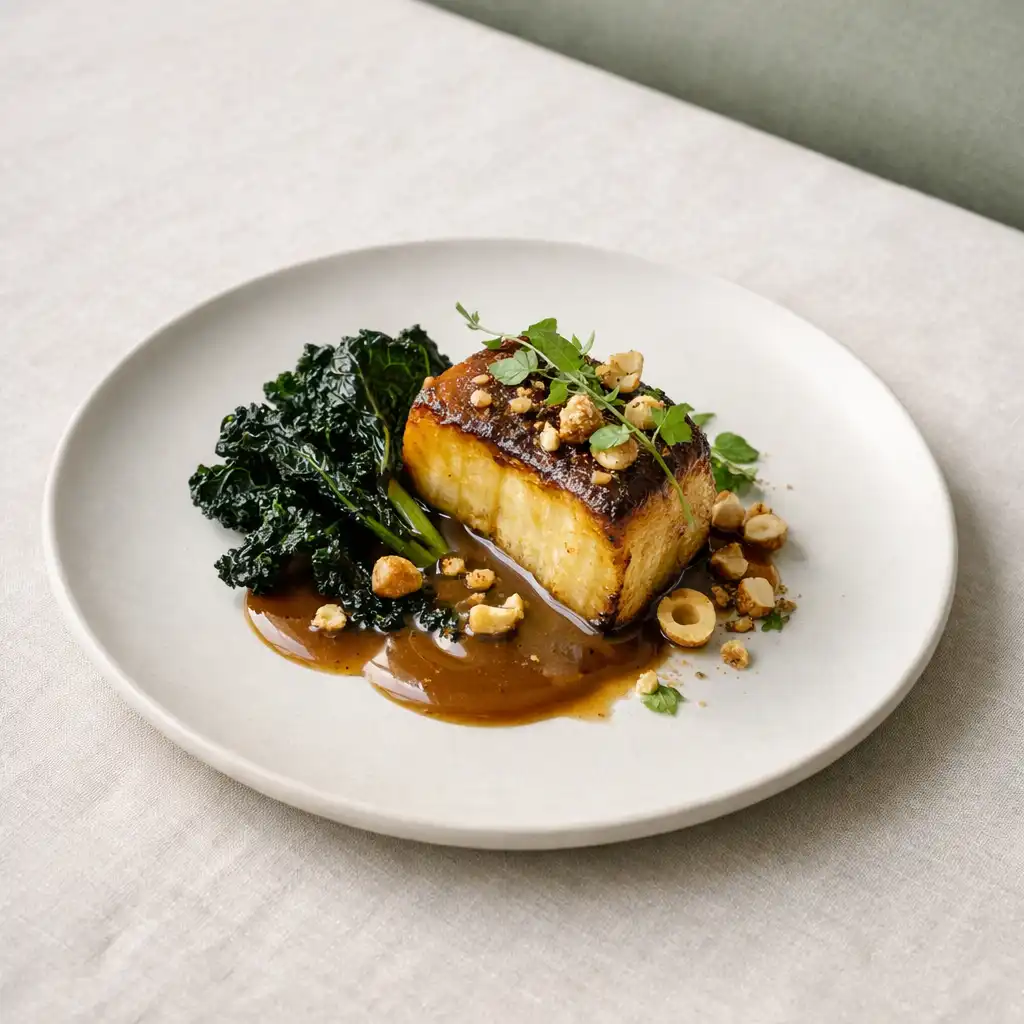
Roasted celeriac, mushroom glaze, cavolo nero and hazelnut
This vegetable-led plate is built around the roast depth of celeriac, with mushroom glaze bringing an earthy, silky line through the centre. Cavolo nero contributes a dark leafy bitterness, while hazelnut adds a toasted finish and a change in texture that keeps the course lively from first bite to last.
It is substantial because it is composed for flavour and texture in its own right, not because it is standing in for another kind of dish. The plate holds warmth, bitterness and richness in balance, making space for the quieter detail of the vegetables to remain visible.
Seasonal note
Vegetable work follows what is in best condition. Garnish, leaf and finishing details may change with the season, while the plate’s core balance of roast depth, green bitterness and toasted texture remains recognisable.
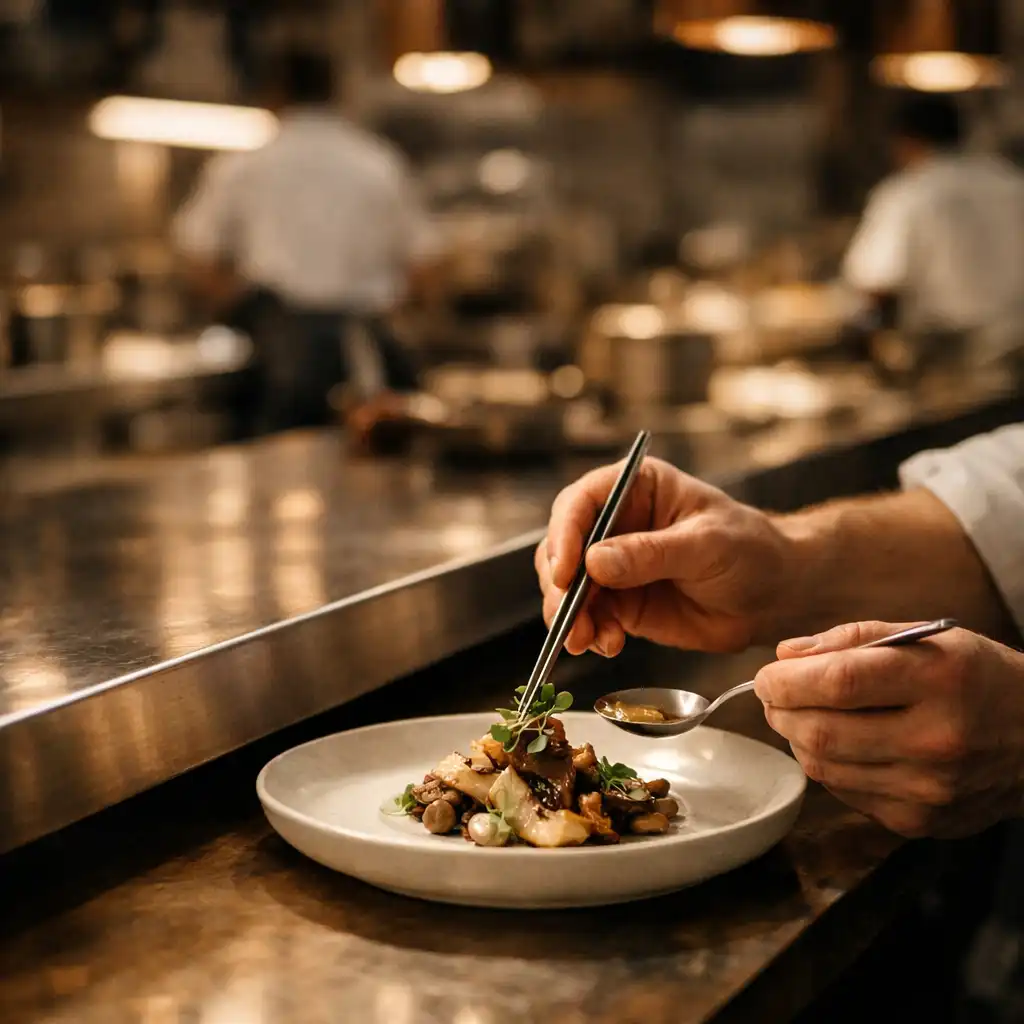
In the open kitchen, the final moments are composed rather than hurried: a taste, a small adjustment, a spoon of sauce, the placement of a last leaf. Hands, tools and porcelain meet at the pass while the kitchen works as a quiet shared rhythm. The focus is not display; it is getting the balance right before service.
That physical attention links every signature dish to the dining room. Temperature matters. Proportion matters. So does the moment a plate leaves the pass and joins a table already in conversation. The finished course carries the work of many small decisions, then makes room for the guest’s own experience of it.
01
Taste
A final check for seasoning, acidity and balance gives the plate its last point of clarity before it moves into service.
02
Plate
Proportion, temperature and a clear focal point guide the arrangement, allowing the porcelain to hold each element with purpose.
03
Send
The dish leaves the pass for the dining room, where pace, conversation and the wider table complete the experience.
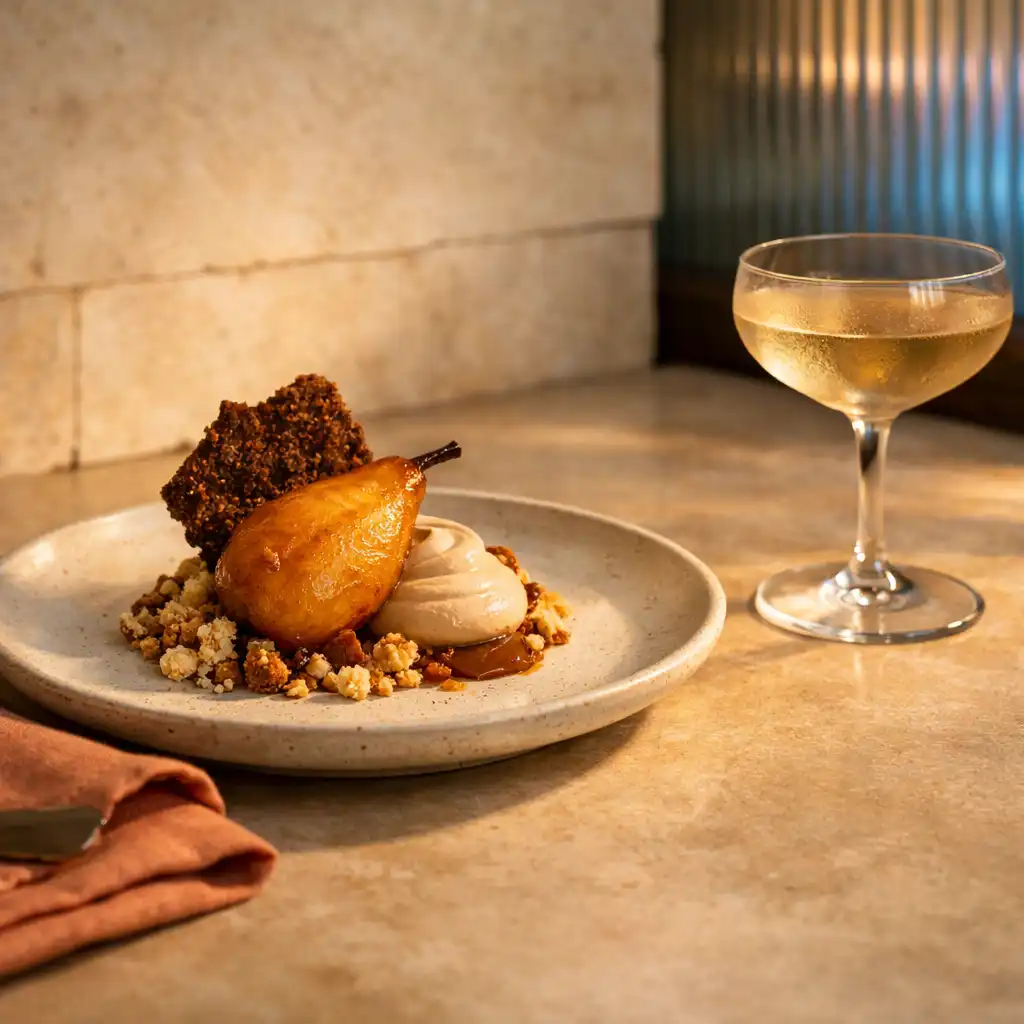
Caramelised pear, brown butter cream, almond and rye
This final course brings fruit brightness into contact with toasted depth. Caramelised pear carries a gentle sweetness and softness, while brown butter cream rounds the plate with a warm, nutty richness. Almond and rye provide the crisp finish, creating a dessert that feels measured and textural rather than overtly sweet.
It is an unhurried close to the sequence: a plate with enough contrast to hold attention, then enough restraint to leave the table open for a final conversation.
After dinner, still at the table
A considered cocktail can continue the same rhythm alongside or after dessert. Citrus, bitter and botanical notes offer a clear, conversational counterpoint to fruit and toasted cream, keeping the emphasis on the dining table rather than turning the moment into a separate occasion.
Final course / pear, toasted grain and ribbed glass
Dining room / porcelain, linen, pale oak and sage upholstery
The room around the plate
At the dining table
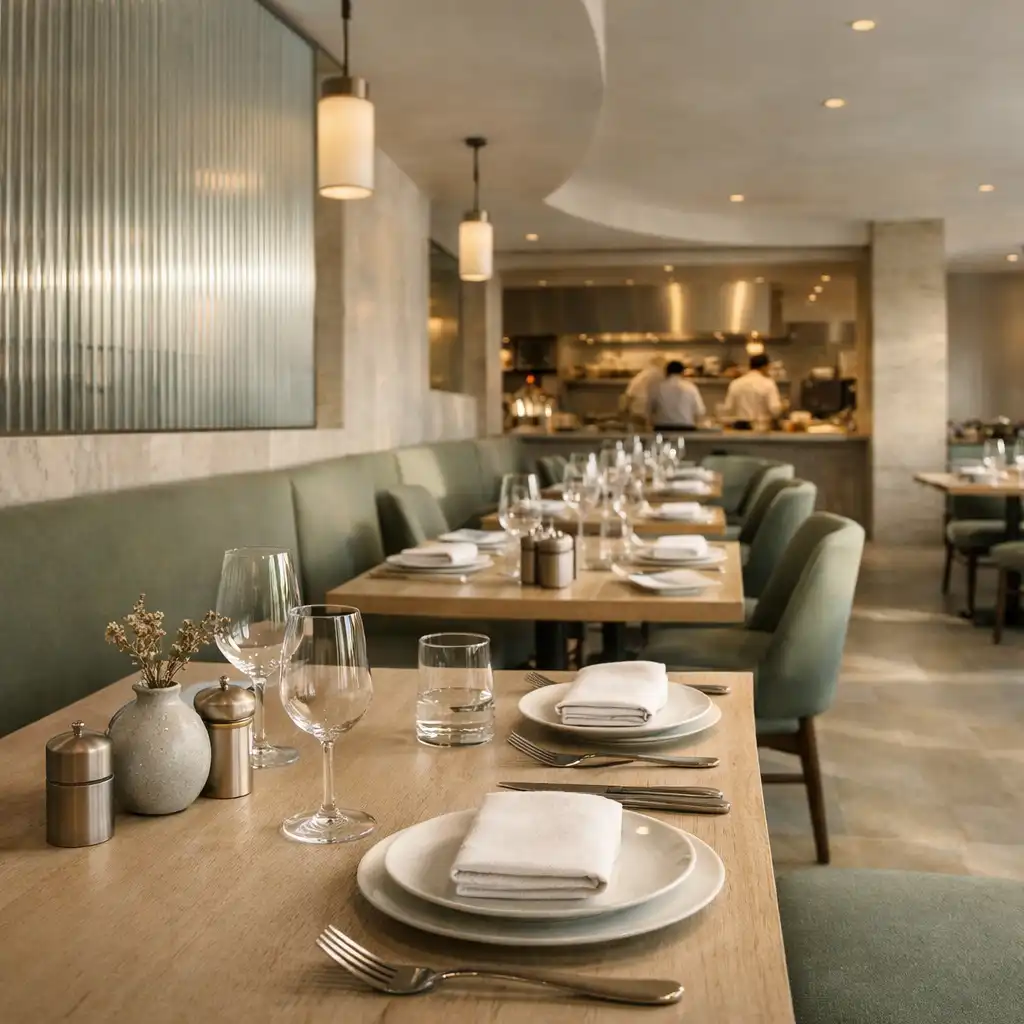
Signature dishes are made for more than a photograph. In the dining room, porcelain, linen, pale oak and travertine create a calm setting for the courses, while sage upholstery and the contained energy of the open kitchen bring softness and movement. The materials are tactile, but they do not compete with the food.
As the table moves from one course to the next, the room gives each plate space to arrive. A pause between dishes, a shared observation or the simple reach for another taste can become part of the sequence, making dinner feel considered without becoming formal.
The long-table rhythm
The sequence can unfold through conversation, pauses and different appetites. The table makes room for shared observations while allowing each diner to find their own pace through the courses.
Material, not theatre
Restrained light, stone, timber and ceramic support the food through texture rather than spectacle. The setting stays physical and calm, preparing the transition into evening without overwhelming the meal.
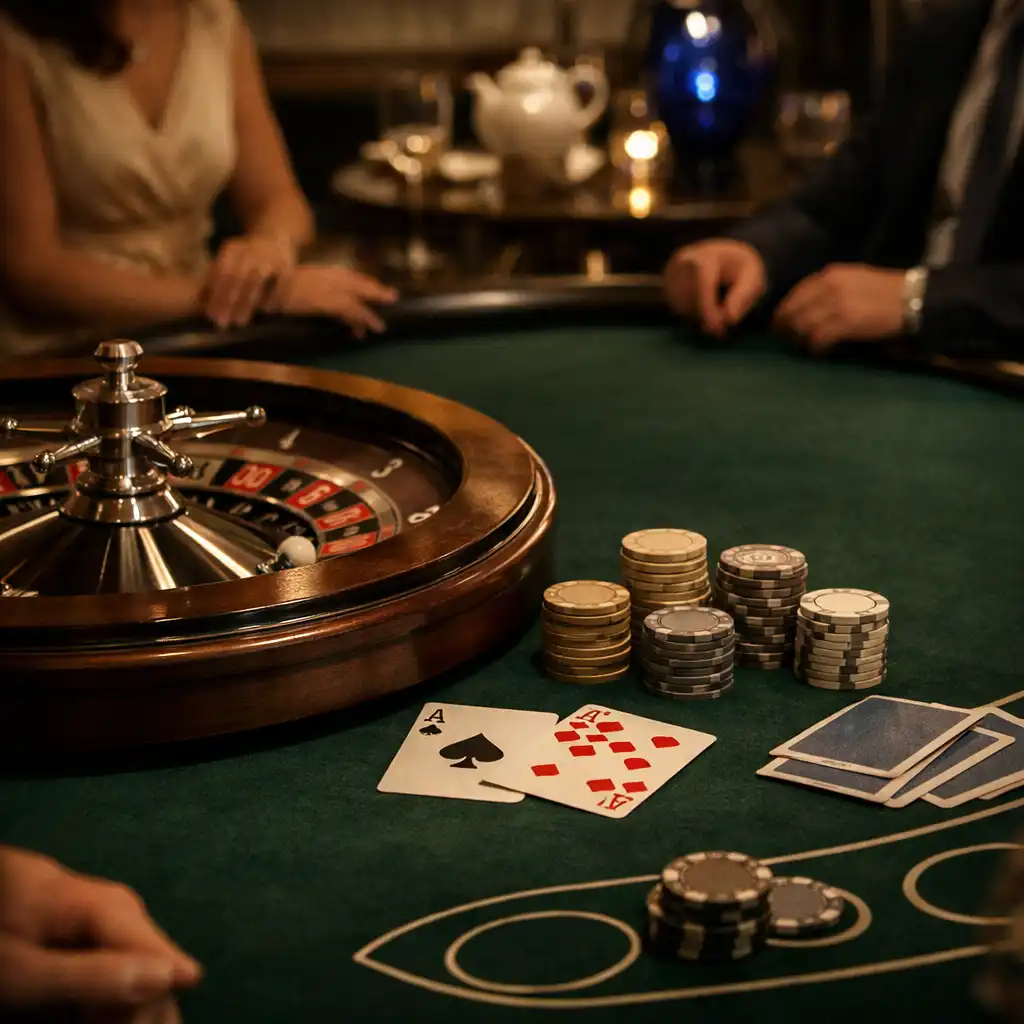
Dinner can extend into an elegant physical Casino Lounge, where guests gather face-to-face around real poker tables, roulette tables and blackjack tables. The lounge follows the restaurant’s material language: deep green felt, porcelain highlights, quiet architectural detail and the social focus of people sharing a table.
It remains an in-venue evening experience, led by the dining room rather than separated from it. Cards, neutral chips and table layouts are tactile details within a composed lounge atmosphere, designed for company and conversation after the final course.
Poker tables
Poker is presented as a face-to-face table setting: real cards, neutral chips and shared attention gathered across the felt. The emphasis is physical atmosphere, table craft and the people around it.
Roulette and blackjack tables
Roulette and blackjack add tactile table experiences to the after-dinner rhythm. Real tables, warm light and in-person company create an evening dimension that remains grounded in the room itself.