The kitchen

Our chefs

The Course Table is shaped in the working rhythm of the kitchen, where seasonal ingredients, careful technique and the pace of service meet before they reach the table. Our focus is contemporary Australian dining that feels composed, generous and present in the moment.

Each course is considered within a longer meal: flavour, texture, temperature and pace move together across seafood, meat, vegetable-led plates and desserts. The aim is not an isolated plate, but a table with its own clear progression.

From the first preparation at the bench to the final check at the pass, the kitchen remains close to the experience of dining in Sydney-style interiors made for conversation.

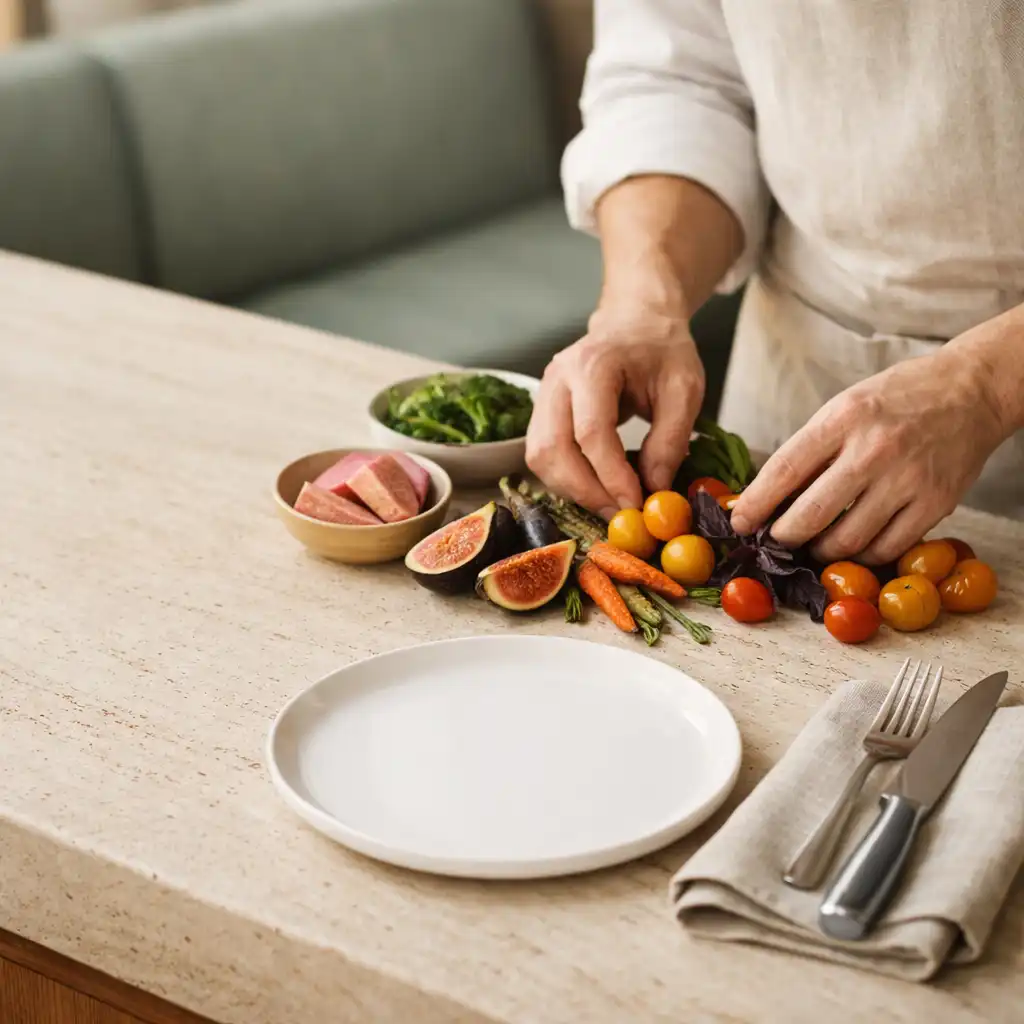
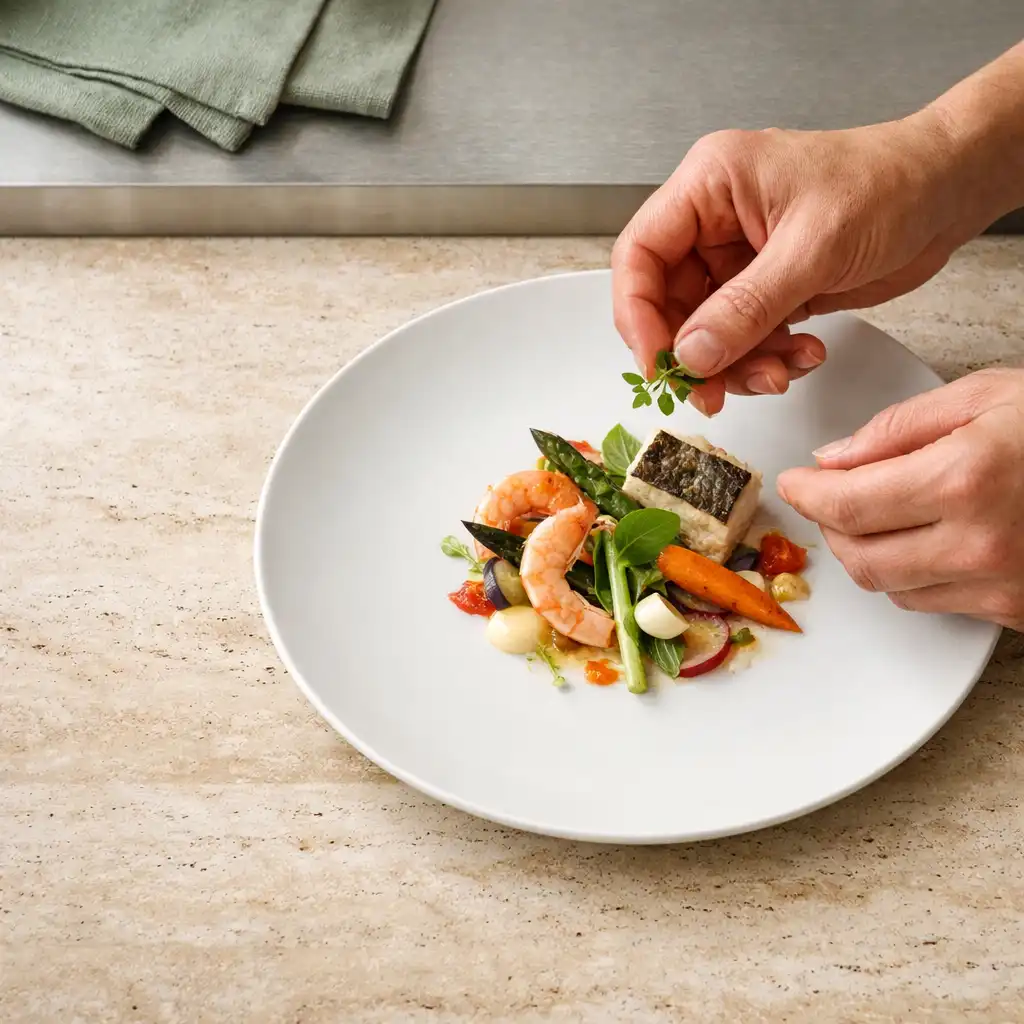
Chef’s hands arranging seasonal produce on a travertine pass beside a porcelain plate
Seasonal preparation on the pass

Kitchen approach

The kitchen’s working principles

01

Begin with the season

Seasonal produce gives the menu its first direction. Rather than treating ingredients as decoration, the kitchen looks to their freshness, character and natural structure before building a course around them. Produce, seafood and considered pantry work keep the menu attentive to change, allowing each seasonal table to feel responsive without making a promise about any single ingredient.
02

Respect the material

Texture, temperature and restraint guide the work at the bench. In the warmth of the pass, against stainless steel and porcelain, technique is used to clarify an ingredient rather than disguise it. That attention can carry through seafood, meat and vegetable-led plates alike, keeping the primary element recognisable while every supporting detail has a reason to be there.

03

Cook for the table, not the photograph

A finished course belongs to a lived meal. The kitchen considers how a plate arrives within conversation, shared attention and the atmosphere of the dining room, not simply as a moment on its own. That perspective informs the calm of the setting as much as the food itself. See the signature dishes as part of the whole course progression.

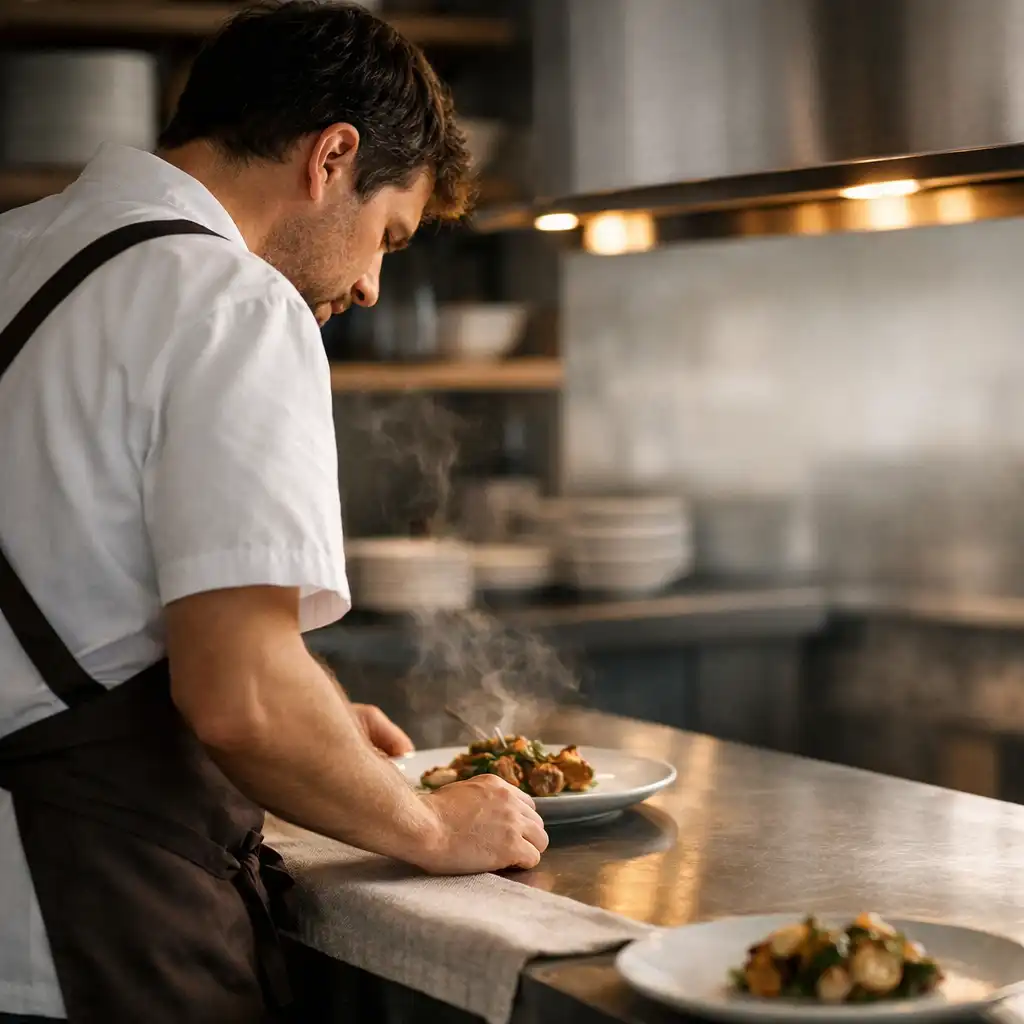
Anonymous chef checking a plated course at an open stainless-steel pass
At the pass — focus, balance, service

Working together

The people at the pass

The culinary lead

The culinary lead holds the menu’s overall point of view, considering how season, course progression and clarity meet across the table. This is a collaborative role: listening to the wider kitchen, keeping a close eye on the movement of service and helping each course belong to the same dining story. The emphasis stays on the guest’s experience rather than a single personality behind it.

The section chefs

Section chefs carry ingredients through preparation and into service, maintaining detail as seafood, meat and vegetable-led courses take shape. Their work depends on practical coordination, repeated tasting and close attention to timing. As the menu changes its emphasis, the team works with the same measured standard: organise clearly, communicate simply and send food that feels settled on the table.

Final course

The pastry and finishing hand

The final course extends the kitchen’s sense of balance through texture, sweetness, acidity and the pleasure of a composed ending. Desserts are not treated as an afterthought; they complete the rhythm of the meal and the guest’s final impression. Finishing work brings that attention back to porcelain presentation, while remaining part of the same shared kitchen conversation.

One table, many precise hands. The page celebrates a working team whose shared destination is always the course in front of the guest.

From ingredient to course

Ingredient to pass

01

Choose with intent

The process begins with close attention to freshness, structure and an ingredient’s place within the wider course progression. Produce, seafood, meat and dessert components are considered through sensory judgement: what they can bring to the table, what should remain clear and where contrast may be most useful.

02

Prepare with clarity

At the bench, preparation is a measured practice of tasting, adjusting and organising. Stainless steel surfaces and calm repetition keep components legible before service begins. The open-kitchen sensibility is not spectacle; it is a visible language of care, where each element is readied to arrive with definition.

03

Send with pace

The pass is where a course is checked for balance and sent into the dining room in step with its table. Porcelain, linen and front-of-house flow meet in that final moment. The result is a composed service gesture rather than an isolated plating exercise. See signature dishes.

Chef’s hand adding a final garnish to a porcelain dish at the pass
A final check before the dining room

Courses designed for conversation

A table has its own rhythm. The kitchen considers how courses relate to one another and to the conversation around them, so a meal can unfold with ease rather than hurry. This is the course-table idea in practice: food arriving as part of a longer, shared experience.

Menu language

Contrast without clutter

The food story can move between bright produce, seafood, deeper savoury notes, vegetable-led plates and dessert while remaining coherent in feeling and presentation. Texture and temperature are held in balance, with each course allowed to speak clearly. The Menu offers the clearest view of the current food direction.

At the table

The plate belongs to the room

A course is received among linen, porcelain, pale oak and travertine. Those materials are not background decoration; they are part of the calm that lets food and conversation remain central. The distinctive Sydney-style interior gives each place setting a grounded, architectural context without taking attention away from the meal.

See the courses in full
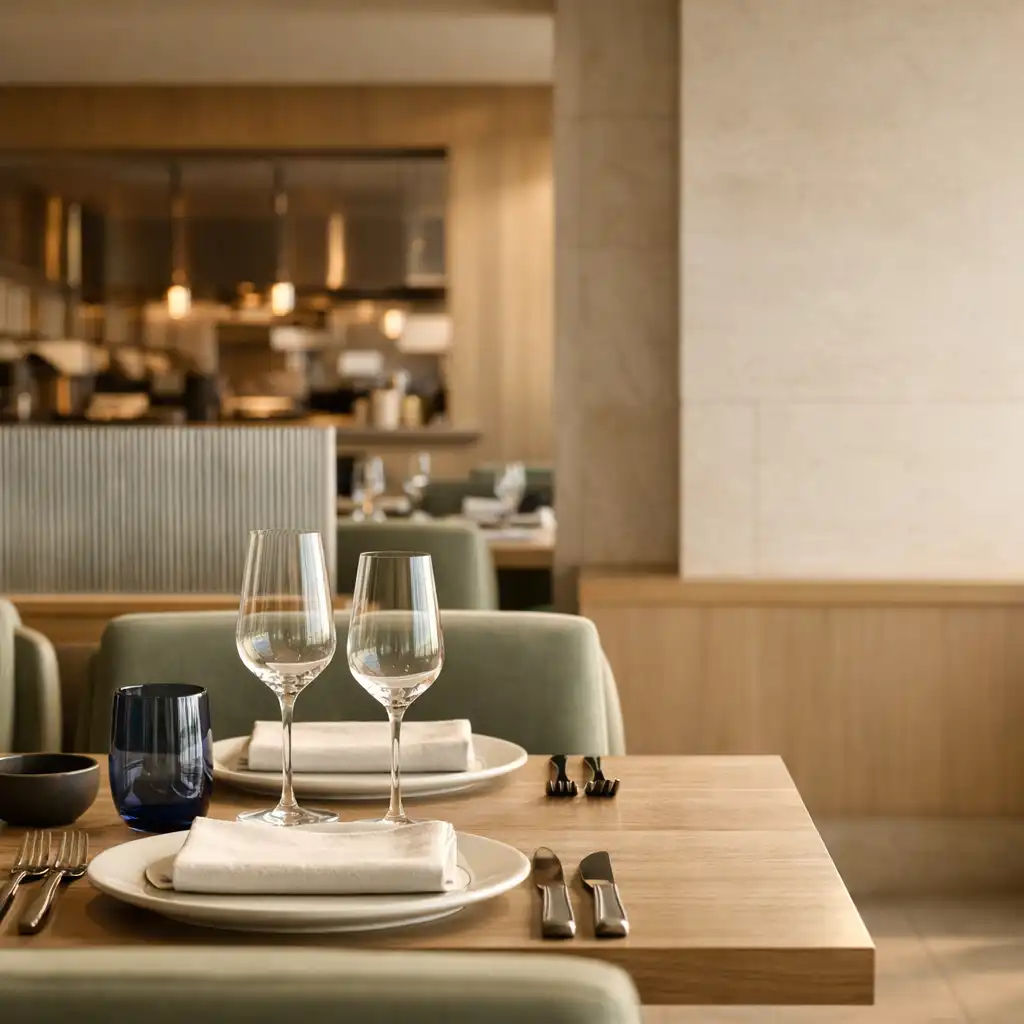
Daylight dining room with porcelain settings, pale oak, travertine and sage upholstery
Porcelain, pale oak, sage upholstery and daylight

Dining room

The room informs the work

The dining room is a material context for the kitchen’s work. Porcelain, pale oak, sage upholstery and travertine help courses feel settled at the table, carrying the same calm attention found at the pass into the guest’s place setting.

Light, surface and service work together quietly. Natural directional light, tactile finishes and clear table settings allow the food and conversation to remain central, giving hospitality an architectural sense of ease.

From the pass to the place setting, a course becomes a relationship between chef, service and guest — a useful threshold as the room moves toward evening.

Cocktails and evening

The bar’s parallel discipline

The table continues at the bar. Cocktails are considered as part of an evening’s progression, offering another expression of balance, season and hospitality alongside the food. They extend the dining experience without displacing it, keeping the restaurant and the shared table as the centre of the night.

Considered alongside the meal

The same attention to proportion informs the move from a course to a cocktail. It is a matter of atmosphere and accompaniment: a drink can sit beside conversation, respond to the changing light and continue the composed feeling of the dining room without needing a separate story of its own.

Evening service

A change in light, not a change in care

As daylight softens, ribbed glass, deeper tones and restrained ultramarine reflections bring a quieter evening character to the room. Porcelain highlights and attentive tables remain. The next setting is still physical and social: an in-person extension of the night, shaped by the same consideration.

Discover the Casino Lounge

Signature dishes • Poker tables • Roulette • Blackjack • Casino Lounge

After dinner, face to face

Dinner can continue into an evening gathered around real tables. The Casino Lounge is an in-person extension of The Course Table, where face-to-face poker at poker tables, roulette and blackjack at card tables sit within conversation and the restaurant’s considered atmosphere. The dining experience remains the centre of the night; the lounge offers a tactile, social setting beyond the final course.

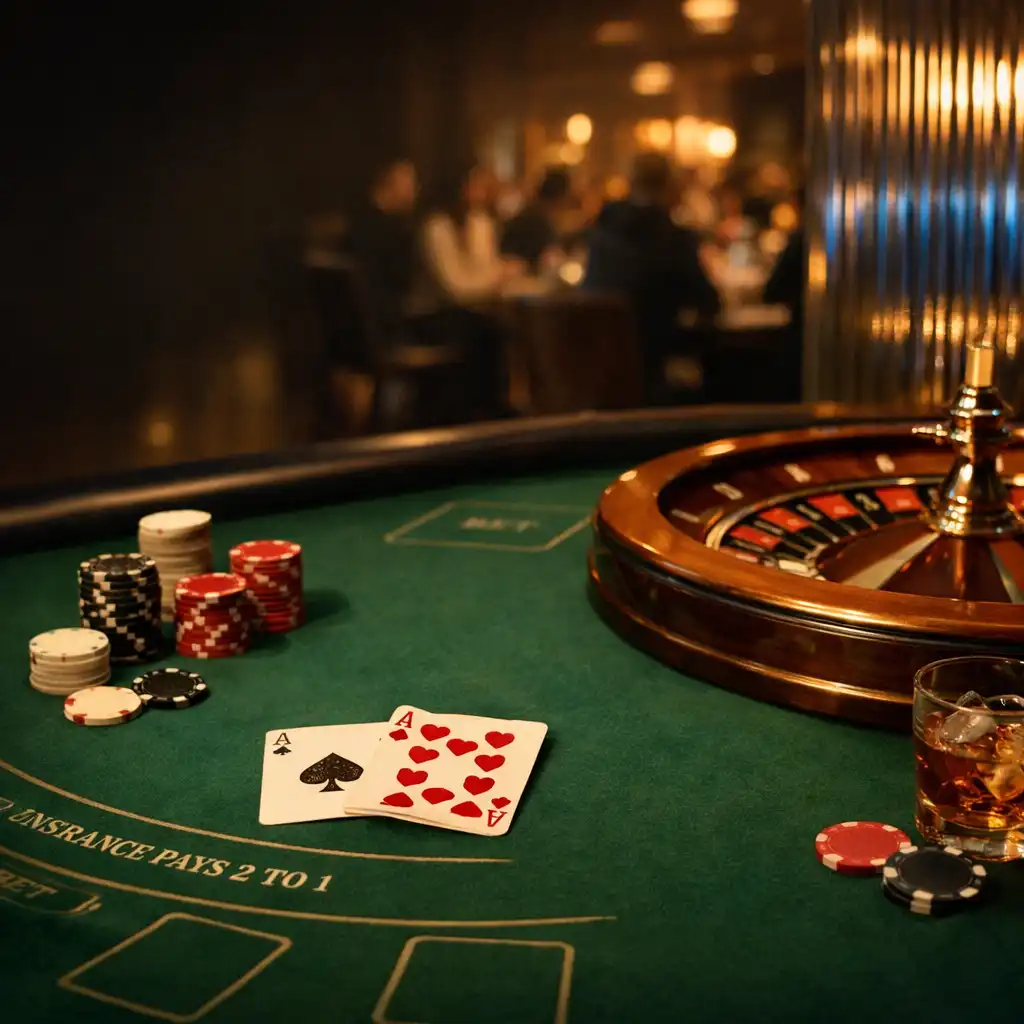
Physical Casino Lounge table with deep green felt, playing cards and neutral chips
Deep green felt, porcelain light and physical table detail

Material, not spectacle

Deep green felt, neutral chips, playing cards, a roulette wheel edge and blackjack layouts are treated as tactile objects within an elegant room. The atmosphere is social and table-led rather than screen-led, with warm tungsten light and restrained ultramarine reflection carrying the material language of dinner into the evening.

Discover the Lounge

Kitchen notes

Kitchen notes for the curious

Will the menu reflect the season?

Seasonal ingredients are central to the kitchen’s point of view, helping the food remain attentive to changing produce and the wider rhythm of the year. That does not make a fixed promise about a particular ingredient or course. For the broader approach, explore The Seasonal Table.

Is the kitchen focused on one kind of dish?

The Course Table’s food story includes seafood, meat dishes, vegetarian plates and desserts. These are parts of a menu language rather than guarantees of what appears at every moment. The current menu is the clearest place to understand the food currently being explored across the table.

How does the Casino Lounge relate to dinner?

The Casino Lounge is a physical, face-to-face evening extension featuring poker tables, roulette and blackjack card tables. It is framed by the same table-centred hospitality that guides the restaurant, while dining remains the centre of The Course Table experience. Read more about the Casino Lounge in its dedicated context.

The shared destination

A table worth returning to

The chefs’ work is completed at the table: in the course, the room and the conversation it makes possible. Continue into the menu for the food story, or get in touch with the restaurant for a general real-world enquiry.